

Miyata Group

- Affiliation
- International MegaGauss Science Laboratory
- Course
- Adv. Mat., Frontier Sci.
 Research Associate SUDO, Kenta
 Project Research Associate YANG, Zhuo
Research Subjects
- Magneto-spectroscopy on quantum materials under ultrahigh magnetic fields
- High-precision electrical conductivity measurement using microfabrication techniques
- Magnet technology
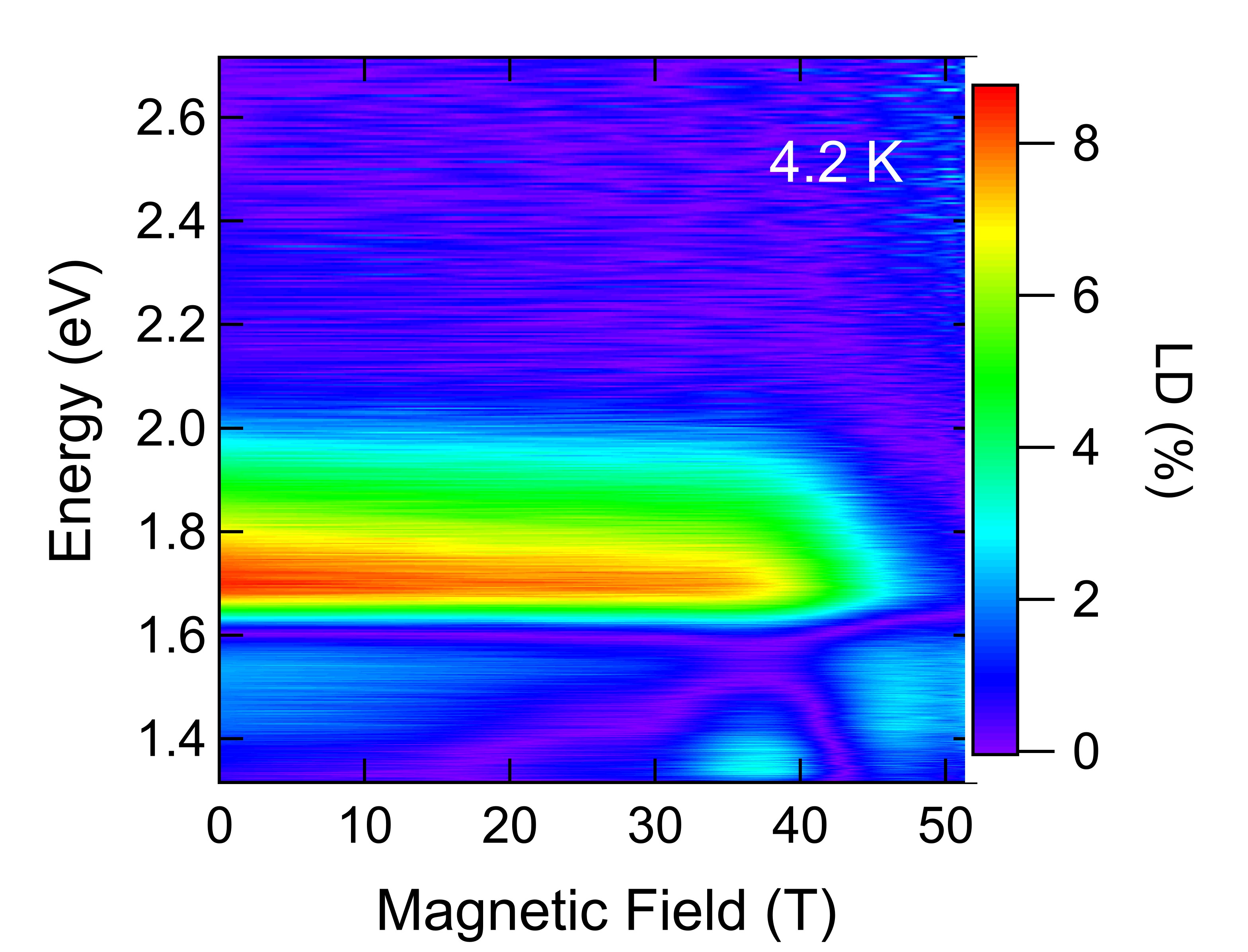
Our laboratory focuses on high-field science, ranging from the development of non-destructive pulsed magnets to new measurement techniques under pulsed high magnetic fields, as well as a wide range of measurements in high magnetic fields. Currently, we are advancing terahertz spectroscopy under pulsed magnetic fields using quantum cascade lasers (QCLs). We are also improving the sensitivity of magneto-optical spectroscopy in the visible and near-infrared regions for micro-scale samples, including atomically thin films, and developing new magneto-spectroscopy techniques. With these approaches, we aim to elucidate unconventional excitonic states, achieve magnetic-field control of exciton–magnon coupling, and deepen our understanding of the symmetry of electronic states and their magnetic-field response in van der Waals materials. In addition, we are conducting high-precision electrical conductivity measurements utilizing microfabrication techniques based on focused ion beam (FIB) processing, with the goal of elucidating electronic states in the quantum limit. We are also advancing megagauss science in magnetic fields exceeding 100 T to explore novel quantum phenomena under extreme conditions.