

Kofu Group

 Research Associate AKIBA, Hiroshi
 Research Associate PIYAWONGWATTHANA, Pharit
Research Subjects
- Dynamics of hydrogen atoms and hydrogen-containing molecules in a wide range of materials
- Ion dynamics of ionic conductors
- Spin dynamics of spin glasses and molecular magnets
- Development of neutron scattering instruments and challenges to new measurements
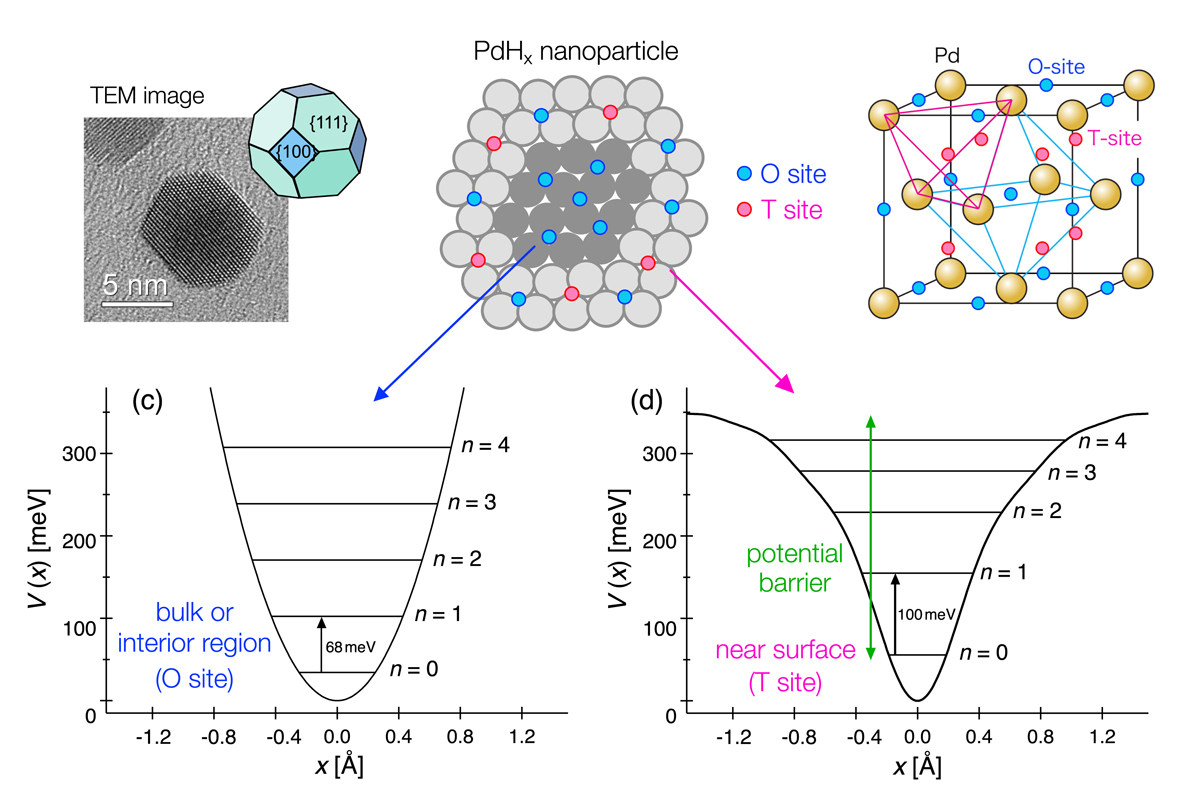
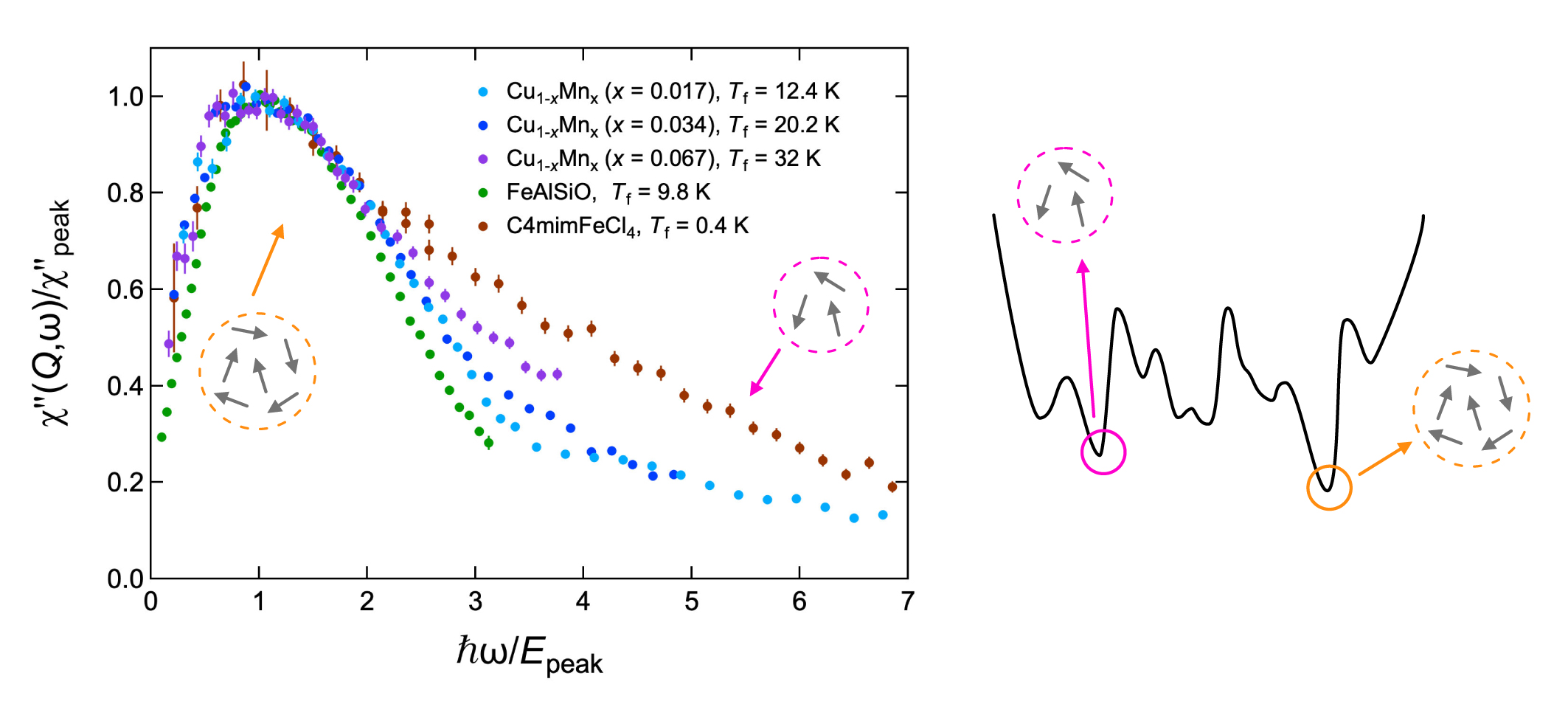
We study the dynamics and structure of atoms, molecules, and spins in various materials using neutron scattering techniques to discover novel phenomena and universality inherent in a wide range of materials. Neutron scattering is a powerful probe for observing light elements such as hydrogen and spins. Our current research focuses on hydrogen compounds, hydrates, ionic conductors, and spin glasses and molecular magnets that lack long-range order. To investigate the dynamic structures of these materials at the atomic scale, we utilize various neutron scattering instruments around the world. By combining with macroscopic properties such as heat capacity, dielectric constant, and magnetic susceptibility, we aim to understand phenomena arising from quantum effects and disorder. We are also developing new scattering techniques and data analysis, including the separation of coherent and incoherent scattering using polarized neutrons and the transformation into space-time correlation functions, as well as developing new neutron scattering spectrometers.