

Hiroi Group
- Affiliation
-
Materials Design and Characterization Laboratory
(concurrent with Quantum Materials Group) - Course
- Adv. Mat., Frontier Sci.
Research Subjects
- Search for new quantum materials
- Physics of the spin-orbit-coupled metal
- Chemistry and physics of mixed-anion compounds
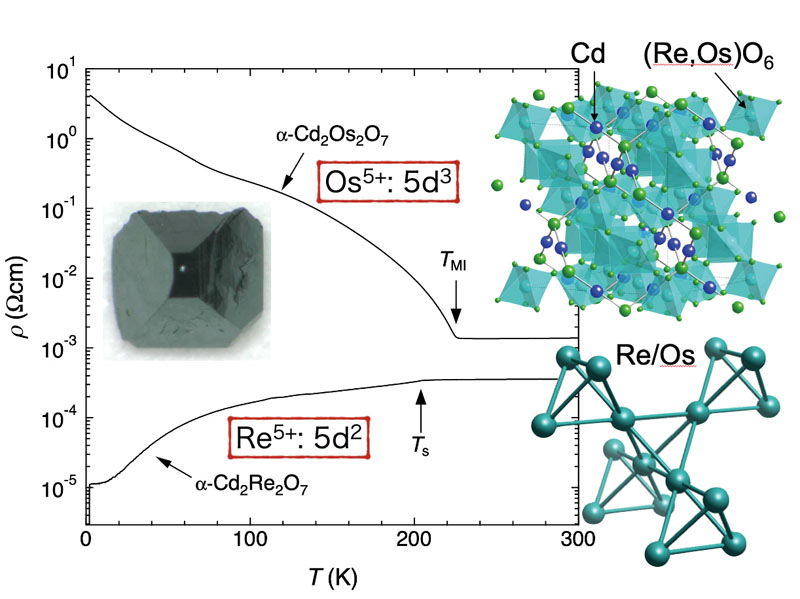
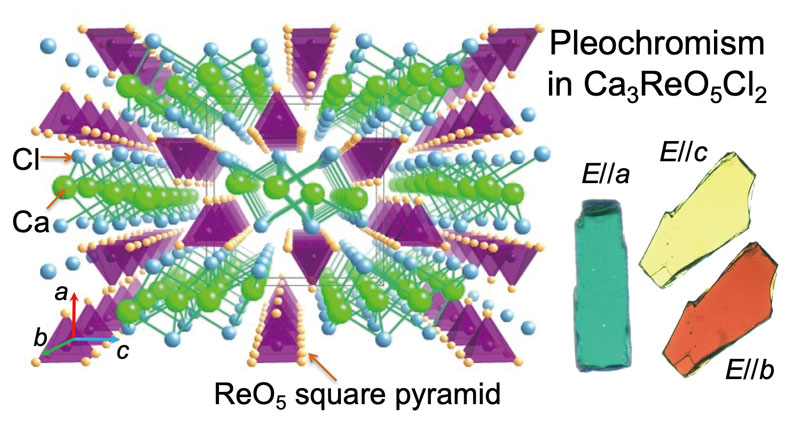
The discovery of high-temperature superconductivity and the subsequent flow of research clearly show how the discovery of new materials has a great impact on condensed matter physics. The ripples are not limited to superconductivity research, but expanded greatly to the establishment of the concept of itinerant-localization in strongly correlated electron systems and interesting correlations between magnetism and conductivity. Moreover, various phenomena originating from spin-orbit interaction and off-diagonal responses due to specific band structures have been focused. It will be more important in the future to discover unknown physical phenomena through the search for new materials and to open up new directions in condensed matter physics. In our laboratory, we are searching for new materials while paying attention to the correlation between the structure and physical properties of various transition metal compounds, and are enjoying the fantastic materials science. In particular, recently, we have been focusing on heavy 5d electron systems and mixed anion compounds containing multiple anions.