

Hasegawa Group

- Affiliation
- Division of Nanoscale Science
- Course
- App. Phys., Eng.
 Research Associate HAZE, Masahiro
Research Subjects
- Exploration of peculiar superconducting / topological states using low-temperature STM
- Nanoscale detection of magnetic resonances and spin dynamics by microwave-assisted spin-polarized STM
- Real-space distribution of spin currents by spin-polarized scanning tunneling potentiometry
- Effective collection of local density of states with an assist of data science
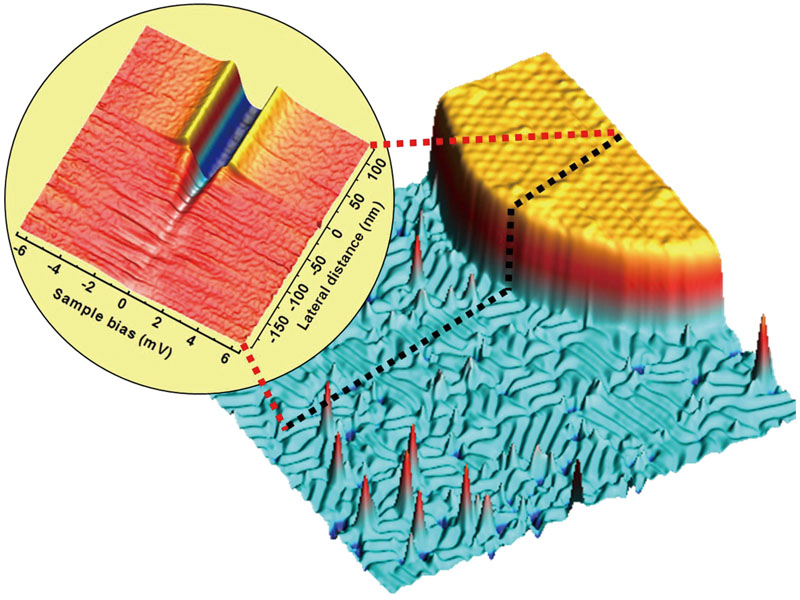
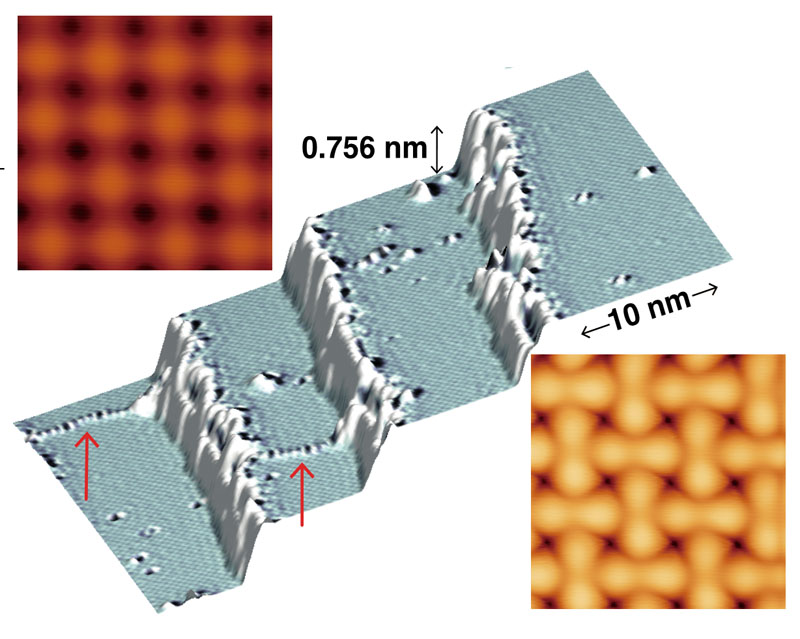
Scanning tunneling microscopy (STM) reveals not only atomic structure of surfaces but also electronic states of sub-nanometer areas by tunneling spectroscopy. With a function of spin-polarized (SP-) STM, the microscope also provides local magnetic properties and surface spin structures, and with inelastic tunneling spectroscopy (IETS), various excitation energies can be extracted. In Hasegawa-lab., by using STMs operated in ultralow temperature and high magnetic field, peculiar local superconducting and topological states that are found e.g. at surfaces, where inversion symmetry is broken, and in the proximity with ferromagnetic and topological materials, have been explored. We have also studied local magnetic properties of nano magnets, peculiar spin-spiral structures, and energy dispersion of surface magnons using SP-STM and SP-IETS. We have also explored unique functionality of the probe microscopy; recent examples include the investigation of local spin dynamics through the detection of magnetic resonances using microwave-assisted SP-STM, spin current detection using SP-scanning tunneling potentiometry, and efficient collection of local density of states based on data-driven science.